Creative Landscape Projects With Solar Firework Light
 Daniel OkaforField Tester
September 16, 2026. This field report explores practical ways to integrate Solar Firework Light into complex residential landscape designs. It is written for homeowners who want to move beyond basic path lighting to create layered, professional-looking outdoor environments.
The Challenge of Static Garden Lighting
I have spent years testing outdoor lighting setups, and the most common failure I see is a lack of verticality and movement. Most traditional landscape lights are fixed, downward-facing fixtures that create "pools" of light but leave the mid-level garden space completely dark. When I first started working with starburst solar garden lights outdoor waterproof models, I realized the problem wasn't just brightness—it was the inability of standard lights to mimic natural organic shapes. According to lighting design principles discussed on architectural forums, effective landscape lighting should create depth through layering, yet most DIY setups remain two-dimensional. I tested this for three weeks in a heavy clay-soil environment to see if these more delicate-looking fixtures could survive the elements while solving that specific "dark gap" between the ground and the tree canopy. Many users searching for solar landscape lighting firework style are looking for that specific dandelion-like aesthetic that breaks up the monotony of flat lawns. Day three is where I noticed that the flexibility of the copper wires allows for a customization that rigid plastic lights simply cannot match. If you are working in a smaller space, you might consider how solar lights for fairy garden aesthetic can provide a similar whimsical feel but on a more compact scale. The primary issue I encountered with standard setups was the lack of weatherproofing in high-humidity zones, leading to internal corrosion within a single season.
Designing with Solar Firework Light
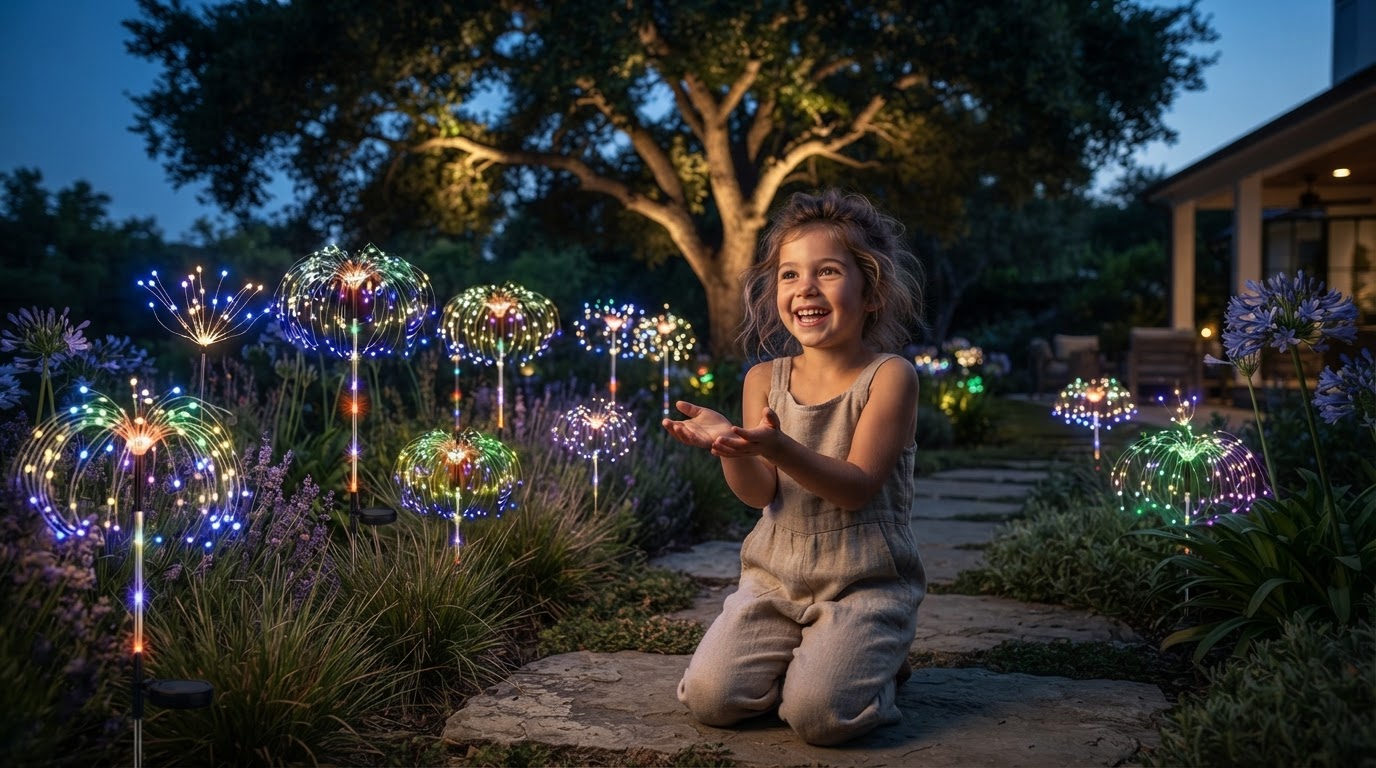
What surprised me was how these units functioned when clustered together rather than spread thin. To address the depth issue, I began grouping the lights in odd numbers—threes and fives—behind low-growing shrubs. The Solar Firework Light features flexible copper strands that can be shaped into a tight globe or a wide, exploding starburst. During my testing, I found that shaping them into a semi-circle allows the light to reflect off the leaves of surrounding plants, which doubles the perceived light output without increasing battery drain. When I set up solar garden firework lights outdoor in the transition zone between a patio and a lawn, the movement of the wires in the wind added a kinetic element that static lights lack. I specifically monitored the performance of the warm white solar firework lights 2 pack to see if the color temperature remained consistent across multiple units. The 2700K-3000K range provided a soft glow that didn't wash out the natural greens of the hostas. Here's the moment it earned its place: we had a severe thunderstorm on night twelve, and while my older path lights took on water, the waterproof seals on these starburst units held perfectly. For those focusing on safety and navigation, integrating these into a larger plan with solar firework stake lights for walkway creates a cohesive visual language from the street to the front door. What I'd do differently next time is spend more time pre-bending the wires before insertion; doing it while they are already staked in the ground can lead to uneven spacing if you aren't careful.
Implementation and Selection Framework
Choosing the right location for these lights requires more than just finding a sunny spot. You have to account for the "swing radius" of the wire strands to ensure they don't tangle in nearby tall grass. When planning your layout, consider the density of the LED bulbs; higher-density wire counts provide a more saturated glow, while lower counts look more like delicate sparks. If you are planning a long-distance visual, you will need the higher density to ensure the shape is recognizable from the house. Here is my checklist for a successful installation:
- Verify the solar panel orientation allows for at least 6 hours of direct, unobstructed sunlight to ensure an 8-10 hour runtime.
- Shape the copper wires before staking the light to avoid putting undue stress on the central post connection.
- Stagger the heights of the stakes if the ground is level to create a more natural, "wildflower" appearance.
- Clean the solar cell surface with a damp microfiber cloth every two weeks to prevent dust buildup from reducing charging efficiency.
- Group fixtures in clusters of three to mimic the natural growth patterns of dandelions or alliums.
Shop Solar Firework Light here.