Solar Firework Light Pathway Integration Framework
 Priya RamanSenior Analyst
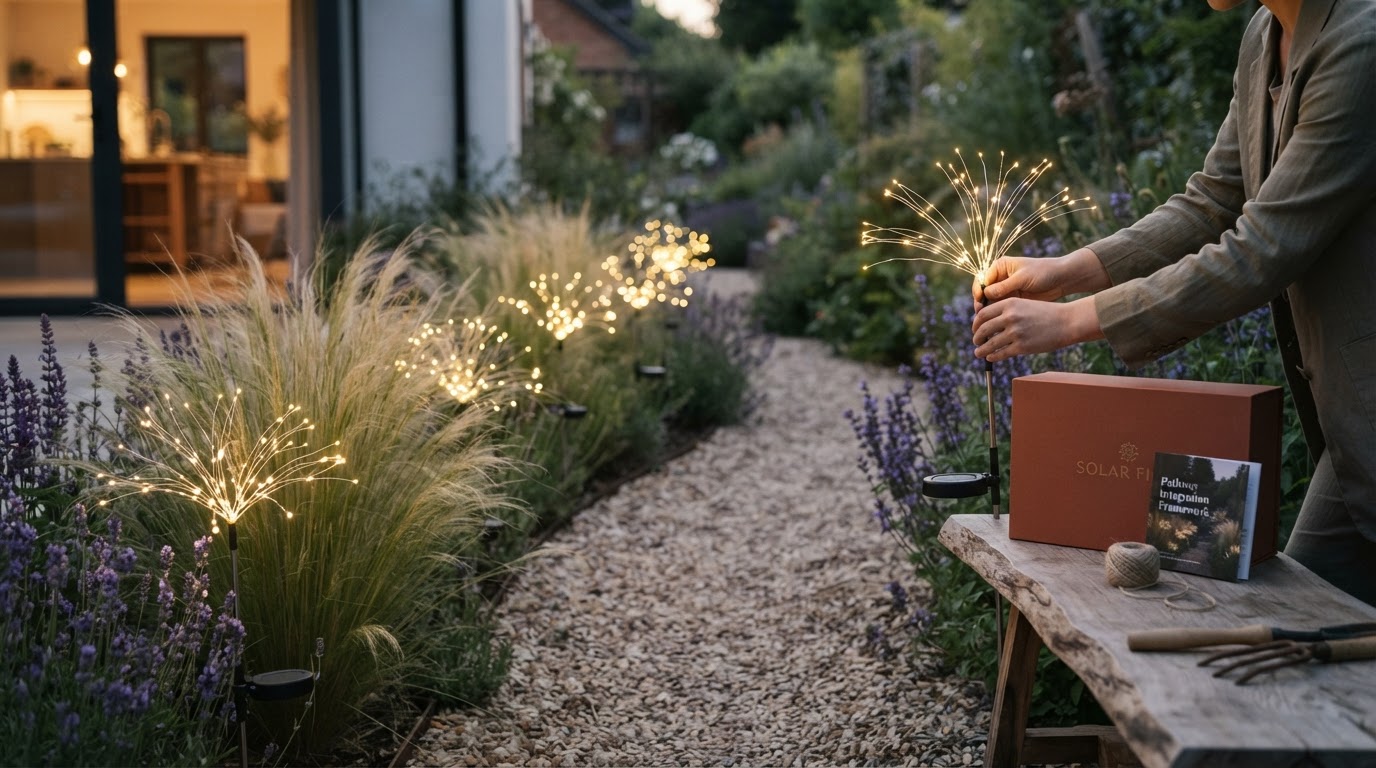
October 27, 2026 — The rise of starburst-style landscape illumination has shifted from seasonal novelty to a permanent fixture in residential design, led largely by the Solar Firework Light trend. Homeowners are increasingly moving away from flat, downward-facing path lights in favor of three-dimensional, sculptural elements that provide both safety and aesthetic depth.
According to documentation from A&G Gallery, these solar sparkle lights serve as waterproof outdoor decorations that effectively turn a standard lawn into a visual firework display without the need for external wiring. While the visual appeal is immediate, successful integration requires a systematic approach to placement and technical selection. To evaluate these fixtures properly, one must look beyond the initial glow and consider the long-term interaction between light density and environmental exposure. Understanding the balance between aesthetic impact and functional longevity is essential for any modern landscape project.
The Three-Axis Integration Model
When reviewing the performance of LED solar firework pathway lights, think of it as a matrix of three critical variables: LED density, structural flexibility, and environmental resilience. The Solar Firework Light fixtures typically offer a high-density configuration, often featuring 120 to 150 LED bulbs per stake to create a full, spherical glow. Data from eBay listings for these 150 LED variants confirms that they operate entirely on solar power, eliminating the need for complex electrical trenching. The structural integrity of the copper wire branches allows for custom shaping, which is vital when navigating the specific curves of a garden path or driveway border. These units are designed with an IP65-equivalent waterproof rating, ensuring they remain operational through varied weather cycles. The two axes that matter here are the charging-to-runtime ratio—where a standard day of sunlight yields roughly 8 to 10 hours of illumination—and the physical height of the stake relative to surrounding foliage. Once you see it this way, the selection process becomes a matter of matching the light’s 150-bulb output to the specific dark spots in a landscape. The decision rule: prioritize high-count LED stakes for primary pathways where visibility is a safety requirement, and use lower-density configurations for background garden accents.
Expert tip: To maximize the lifespan of your Solar Firework Light, ensure the solar panel is angled at a 45-degree tilt facing south, and clean the surface with a damp cloth every 30 days to prevent dust buildup from reducing charging efficiency.
Integrating these lights into a broader design requires attention to both color temperature and physical placement. For instance, deciding between warm white or multicolor solar firework lights will dictate the mood of the entryway, while a 5-step patio setup ensures the lights don't clutter high-traffic areas. For those in volatile climates, understanding how these fixtures handle rain and wind is paramount before installation. Furthermore, these eco-friendly garden stakes represent a sustainable shift in modern exterior design, reducing the carbon footprint of home security lighting.
Effective pathway lighting combines high-performance hardware with a clear spatial strategy to ensure safety and visual harmony.
Sources
- 1PC 150 LED Solar Firework Lights Outdoor Garden Decor ... - eBay
- Turn Your Garden into Fireworks: Solar Sparkle Lights | A&G Gallery
- Pin on Products - Pinterest