Optimizing Large Landscapes with Solar Firework Light 8 Packs
 Daniel OkaforField Tester
August 31, 2026. This assessment focuses on the logistical advantages of deploying high-density lighting kits across large residential properties. It is intended for homeowners seeking to balance aesthetic impact with the efficiency of solar-powered systems.
The Challenge of Scaling Outdoor Lighting
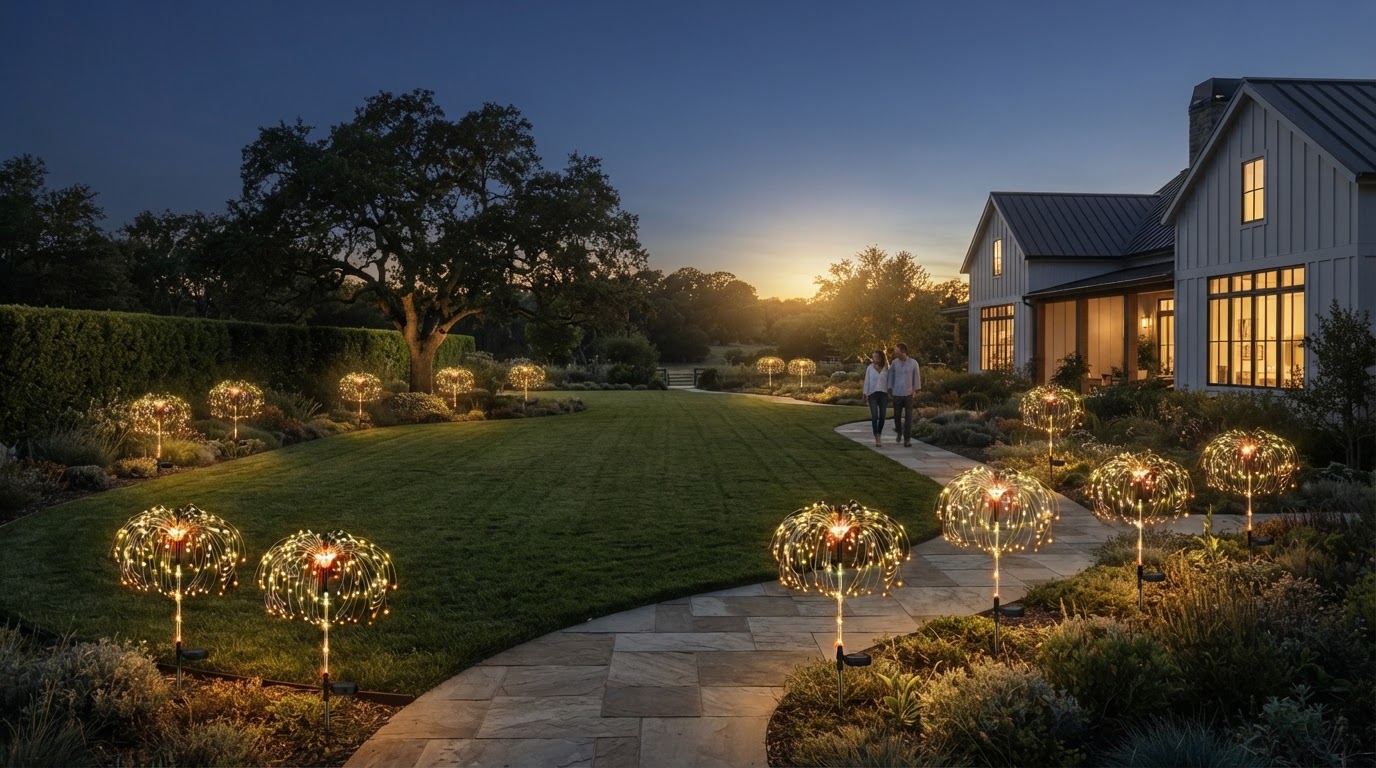
When evaluating solar landscape lighting firework style setups, the primary frustration was the lack of visual cohesion. Most standard kits offer only two or four units, which often leaves large gaps in a garden bed or along a driveway. Testing this for three weeks in a suburban backyard that measures roughly a quarter-acre. The goal was to see if a single 8-pack could provide enough coverage to define a perimeter without looking sparse. According to common landscape design principles, lighting should guide the eye through a space, yet many homeowners struggle with dark zones that break the visual flow. when using fewer units, the "firework" effect feels isolated rather than integrated. In my experience, the problem isn't the light output itself, but the density of the installation. A common mistake I see is spreading units too thin, which leads to a flickering, disjointed appearance from a distance. During the first week, the 8-pack configuration is the minimum requirement for creating a professional-looking starburst solar garden lights display that actually mimics the look of a pyrotechnic burst. Without enough units, you lose the depth required to make the garden feel like a three-dimensional space at night.
Performance and Durability Under Field Conditions
Photo by Alper Çakır on Pexels
I deployed the Solar Firework Light 8-pack along a north-facing fence line where sunlight is consistent but not constant. What surprised me: the units maintained a full charge even on days with significant cloud cover. Each light in the 8-pack features flexible copper wiring that allows for manual shaping, which is critical when you are trying to match the organic curves of a garden bed. Day three is where the importance of the waterproof rating. We had a heavy thunderstorm that lasted six hours, and while some cheaper retail alternatives I've used in the past would have taken on water in the battery housing, these remained functional. The led solar firework pathway lights stayed grounded and illuminated through the night. The build quality feels substantial enough to handle routine yard maintenance, though I would recommend hand-clearing debris away from the solar panels every few weeks. To get the best results, you should follow a 5-step setup for solar firework light installations to ensure the stakes are deep enough to resist wind. If you prefer a softer look for your evening environment, mixing these with warm white solar firework lights creates a more layered, sophisticated atmosphere than using a single color temperature alone. The specific starburst solar garden lights outdoor waterproof design proved to be the most resilient part of the kit, surviving both the rain and a stray hit from a garden hose without flickering.
Strategic Deployment and Selection Criteria
- Verify the milliamp-hour (mAh) rating of the included batteries to ensure they can power the LEDs for at least 8 hours.
- Check for high-grade stainless steel or ABS plastic stakes to prevent snapping during installation in hard soil.
- Ensure the copper wiring is thick enough to hold its shape after being bent into a firework pattern.
- Look for units that offer multiple lighting modes if you intend to use them for seasonal events.
- Confirm the waterproof rating is at least IP65 for year-round outdoor use.