Managing Multi Color Solar Firework Light Remote Modes
 Priya RamanSenior Analyst
September 12, 2026 — The rising consumer demand for starburst solar garden lights outdoor waterproof indicates a shift toward highly customizable, remote-operated landscape features like the Solar Firework Light. As homeowners move beyond static white LEDs, the complexity of multi-color management requires a structured approach to selection. According to recent search data trends, users are increasingly prioritizing high-impression search terms like solar landscape lighting firework style, seeking units that balance aesthetic vibrance with functional durability.
The 3-Point Remote Command Framework
Photo by Benhur Emmanuel on Pexels
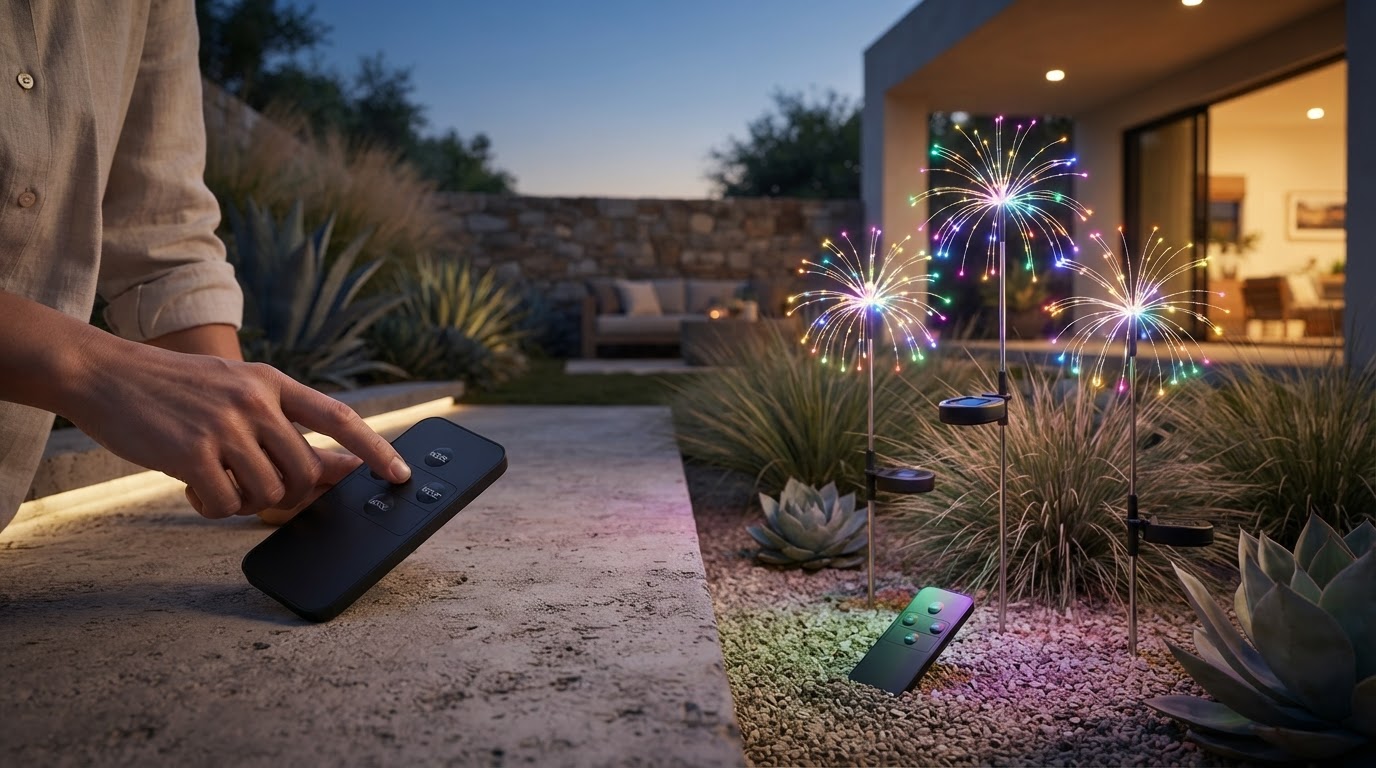
When evaluating multi color solar firework lights, two axes matter here: control proximity and color density. The first axis, control proximity, determines whether a remote uses infrared (IR) or radio frequency (RF) technology. IR remotes typically require a line-of-sight path within 15 feet, whereas RF systems can penetrate light foliage, which is essential for a solar starburst lights garden setup where units are dispersed. The second axis, color density, refers to the number of individual LED diodes per strand. High-density units provide more fluid transitions between the standard eight modes, which typically include flashing, fading, and steady-on states. The final point of the framework is power synchronization. Because these units rely on high-capacity rechargeable batteries, the remote must offer a timer function (usually 3, 5, or 8 hours) to prevent total battery depletion during consecutive overcast days. For those integrating these into a solar firework light for wedding garden environments, the ability to sync multiple units to a single remote command simplifies the management of large-scale installations. Technical specifications for these systems generally include an IP65 waterproof rating, ensuring the internal circuitry and the remote receiver remain functional during rain or snow. Runtime typically averages 8 to 10 hours following a full solar charge cycle, covering a circular area of approximately 3 to 5 feet per light. Think of it as a matrix of utility where the remote is not just a luxury, but a necessary interface for power conservation.
Expert tip: To maximize the lifespan of your remote-controlled units, ensure the solar panel is tilted at a 45-degree angle toward the southern sky, as this optimizes the charge needed to power the wireless receiver which stays in a low-power 'standby' mode even when the lights are off.
This framework ensures that whether you are installing waterproof solar fairy firework lights for winter or seeking the best solar firework lights for patio decoration, the remote functionality remains a reliable asset rather than a point of failure. The decision rule: prioritize RF-based remotes with integrated timers for any installation exceeding four individual units.