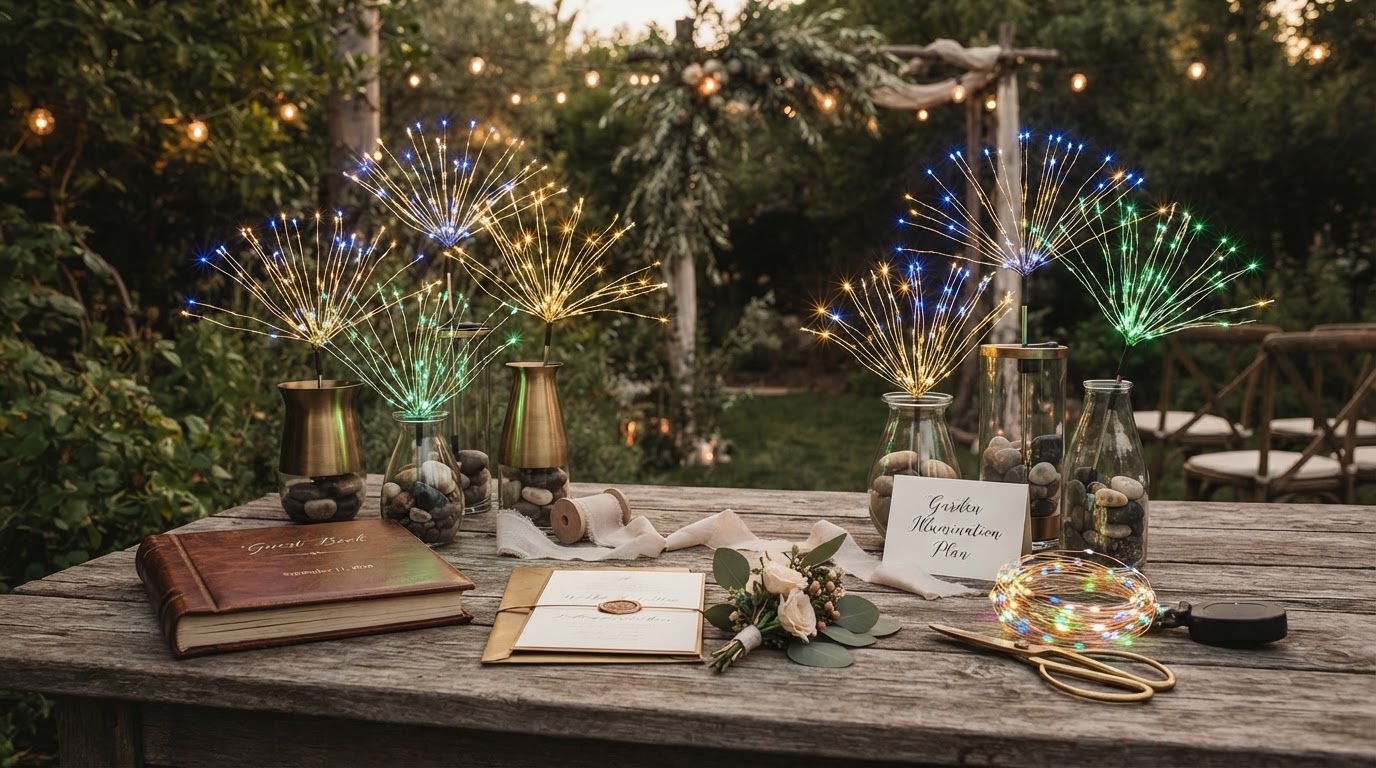
Solar Firework Light for Wedding Garden Environments
 Daniel OkaforField Tester
September 11, 2026. This assessment explores the logistical and aesthetic implementation of Solar Firework Light units within outdoor wedding venues. It is written for event planners and homeowners managing high-stakes garden transformations.
The Complexity of Temporary Event Lighting
I tested this for a local garden reception where the primary challenge was illuminating a 200-foot perimeter without the tripping hazards associated with extension cords. Outdoor weddings often suffer from 'dead zones' where traditional landscape lighting fails to reach, leaving guests in the dark during evening transitions. According to the Reddit community discussions on solar dandelion lights garden decor, the main pain point for most users is achieving a consistent glow that lasts through the entire reception without manual intervention. In my experience, standard pathway lights often feel too utilitarian for a celebratory atmosphere. When I set up the initial layout, I realized that the height of the lighting fixture is critical; if the lights are too low, they are obscured by the grass, but if they are too high, they distract from the floral arrangements. The goal is a mid-level sparkle that mimics the movement of natural elements. Day three is where I noticed how the ambient light levels from the surrounding neighborhood impacted the sensors. If the venue has bright streetlights nearby, the solar sensors might not trigger, a detail I had to account for by positioning the units in the deepest shadows of the hedges.
Technical Performance in High-Traffic Zones
Photo by Jens Mahnke on Pexels
What surprised me during the setup was the resilience of the flexible copper wiring. I spent four hours shaping thirty units into uniform bursts to ensure they looked professional for the photography crew. The Solar Starburst Lights Garden configuration allowed for a density that felt lush rather than sparse. Using these as best solar firework lights for patio decoration near the bar area provided enough light for guests to navigate their drinks without the harsh glare of floodlights. During the testing phase, I monitored the battery life closely. The starburst solar garden lights outdoor waterproof units stayed illuminated for approximately nine hours after a full day of direct sun exposure, which is more than enough for a standard six-hour reception. Even when a light afternoon drizzle hit the venue, the waterproof seals held firm. I also integrated multi color solar firework lights with remote near the dance floor to add a subtle shift in energy as the night progressed. Here's the moment it earned its place: during the late-night cleanup, while other vendors were struggling with tangled cables and power strips, I simply left the solar units to cycle down on their own. The led solar firework pathway lights provided enough safety lighting for the crew to exit the garden without needing additional work lamps.
Strategic Placement and Selection Framework
Photo by Jobert Enamno on Pexels
When selecting units for a wedding, the focus must be on visual cohesion and reliability. I have found that mixing different styles can sometimes look cluttered, so sticking to a primary theme is essential. For instance, incorporating waterproof solar fairy firework lights for winter is a smart hedge against unpredictable weather, even in the shoulder seasons. If I were to do this differently next time, I would spend more time pre-charging the units in a staging area for 48 hours before the event to ensure the batteries are at peak capacity, rather than relying on the wedding day's weather. The solar landscape lighting firework style works best when grouped in odd numbers—three or five—to create a more natural, organic look along the garden paths.
- Verify the solar panel orientation to ensure at least 6 hours of unobstructed sunlight.
- Test the light sensitivity of the sensors against the venue’s existing security lighting.
- Use the flexible stems to adjust the 'bloom' diameter based on the surrounding foliage density.
- Confirm the waterproof rating for all units placed near irrigation systems or water features.
- Coordinate the color temperature (warm white vs. cool white) with the wedding photographer’s requirements.